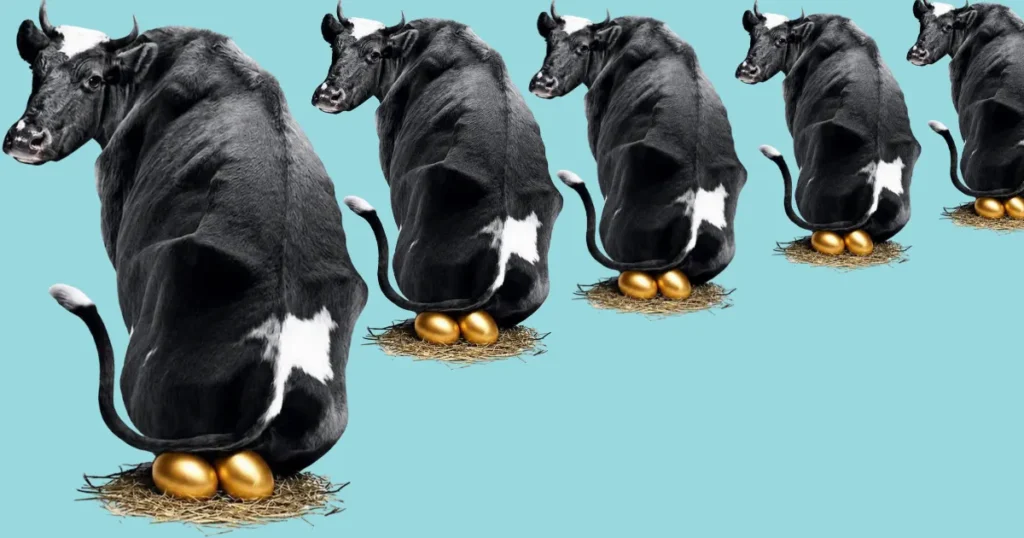
There was a time in India when every home in every village owned a cow.
The cow paid for itself – between the summer and winter cycles, they grew jowar to feed the cow. In return, the cow gave enough milk for the whole family.
When the cow gave birth to a male, the bull ploughed the field or ferried heavy loads.
If the calf was female, she was given off to a relative to replace their ageing cow, (a ‘favour’ that would be called in at an appropriate time), or she was shipped off with the daughter in marriage (because, one more mouth to feed).
This is where the story would have ended had it not been for desire.
One more cow meant they could sell butter and buy a bigger plot of land.
A third cow meant they could launch a range of dairy products.
And so on.
Desire is an age old human instinct that has no finish line.
Modern marketing is the large-scale industrialisation of that instinct.
No one knows it better than HUL
Both Unilever and HUL websites mention that they are in the business of creating desire at scale.
This blurb on the Unilever website is the most comprehensive thesis on modern marketing that I have seen in recent times.
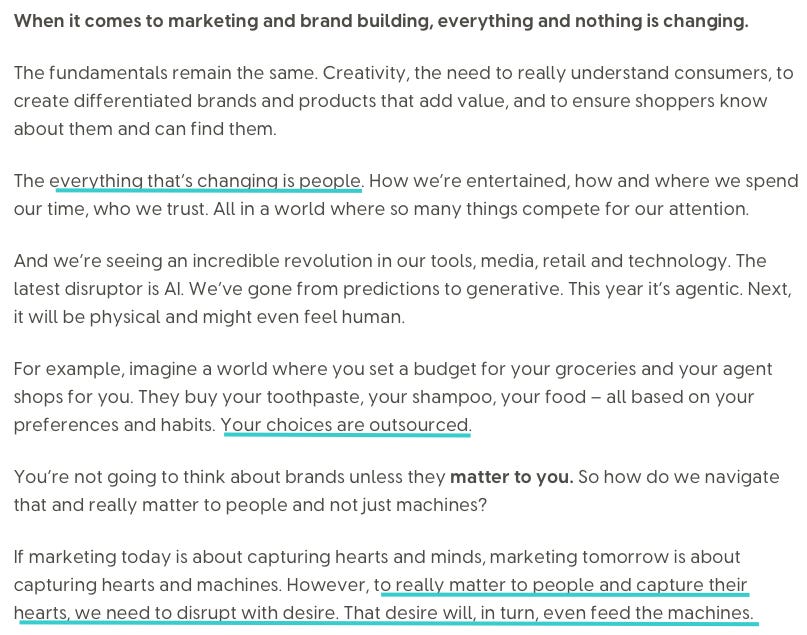
If you read between the lines, what they are really saying is this
Distribution and media are to hardware what brand is to software.
Distribution and media are mass-sourced, mass-reproduced, easy to copy. Brand requires tacit knowledge, is slow to build and hard to replicate.
That’s why HUL knows that unless its brands are desired en masse, all the money it spends on influencers, and all its distribution re-engineering will add up to zero.
Two traps stand in its way .
- Its hardware shrinks desire into containers of the past
- Scale averages differentiation
1. Its hardware shrinks brands into containers of the past
Legacy FMCG has invested millions into a manufacturing, packaging and distribution-logistics infrastructure.
Packaging moulds.
Label sizes.
Recipe mixer units.
Distribution structures.
Logistics SOPs.
All this hardware forces desires to fit into moulds of the past.
A Fordian equivalent of, “you can have any shampoo as long as it uses the moulds we already have.”
When software ossifies into hardware from the 1990s, strategy blindness™creeps in. Until one day, a tsunami of new consumer preferences, new habits, new behaviours wash away brands that reek of desire way past its sell by date.
Brands that don’t fit into containers of the future are doomed to deliver numbers of the past.
2. Scale averages differentiation
When cheap data, hours of doom scrolling, and a smart phone collide with social media networks that are piss drunk on influencers and digital commerce high on speed steroids, racing products to your doorstep, desire is born.
But in India, desire gets stratified and fragmented…
…into a million horizontal layers (gender, family type, family size, values, religion, caste, language, habits, age, health markers, taste preferences)
…and a million vertical layers (education, ability to buy, willingness to buy, state, town class, urban, rural, exposure level).
When we interlock these vertical and horizontal layers, we get millions of potential market segment grids.
Decoding each segment is impossible, unnecessary, and the mark of a novice.
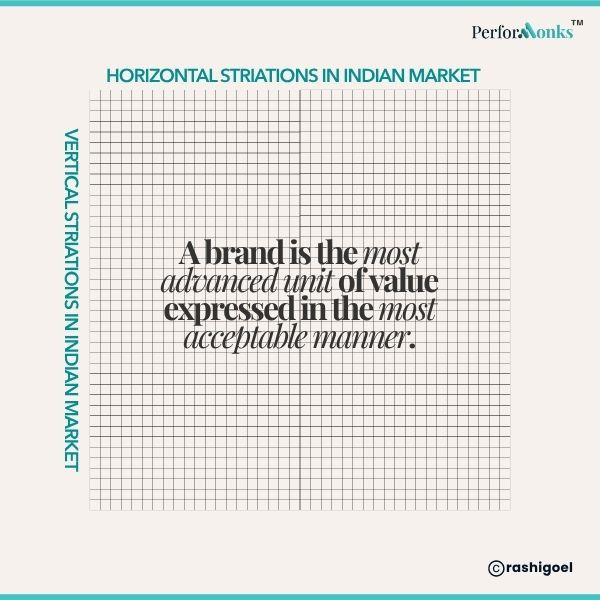
Instead, seasoned marketers design brand propositions1 that are the most advanced unit of value, expressed in the most acceptable manner.
In other words, they ask themselves,
What is the most differentiated product+brand combination that as many people as possible will not just gladly accept, but also salivate over.
The challenges lies with the word acceptable. The moment “most acceptable to as many as possible” becomes the filter, you lose differentiation.
You shave off the most ‘spikey’ bits of your proposition bit by bit until it appeals to the 400 million in India 3 & 4.
But the paradox is that it becomes too boring for the 13 million in India 1.
Think dirty matcha sachets vs. Nescafe Re.1 sachet. The former appeals to India 1 and the latter to India 2-3-4. Both products cannot be one brand.
Year after year, the legacy brand settles for 1% better when the consumer, drunk on social media, and a thumb-swipe away from discovering a new brand, has already lurched 10% forward. That’s how legacy brands keep designing themselves out of the consideration set of the creamy layer of the market.
And that’s precisely where newcomers like Minimalist win.
Minimalist vs. Ponds and Dove
When we bring back the market segment grids, we see that for HUL’s legacy brands that sell in price points from Re.1 upwards, the target audience is the entire grid. For D2C brands, the target is a few squares in the grid.
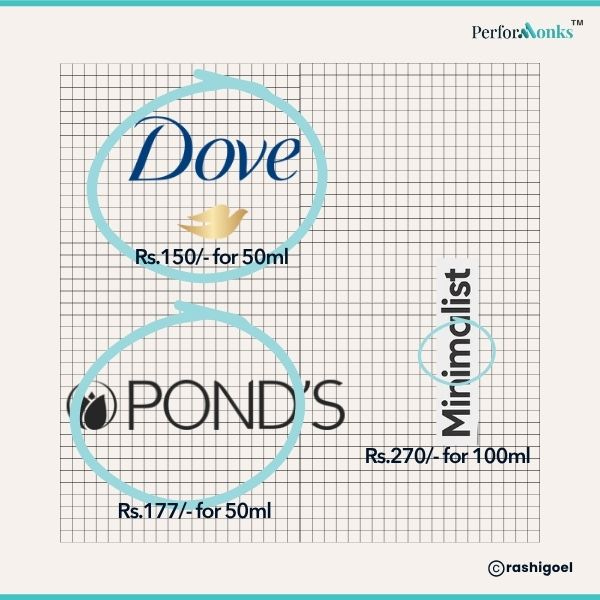
You will notice that gram for gram, Dove and Ponds are more expensive. But Minimalist’s lower relative brand resonance, limited distribution, and a higher put down price (270 vs 177 or 150) reduces its playground to the creamy layer of India 1 consumers who are looking for that new and differentiated proposition that Dove and Pond’s cannot offer.
HUL’s response: de-average the portfolio before the market does it for them
To HUL’s credit, the annual report acknowledges that some brands just won’t make the cut in the future.
It divides the portfolio into Core, Future Core and Market Makers.
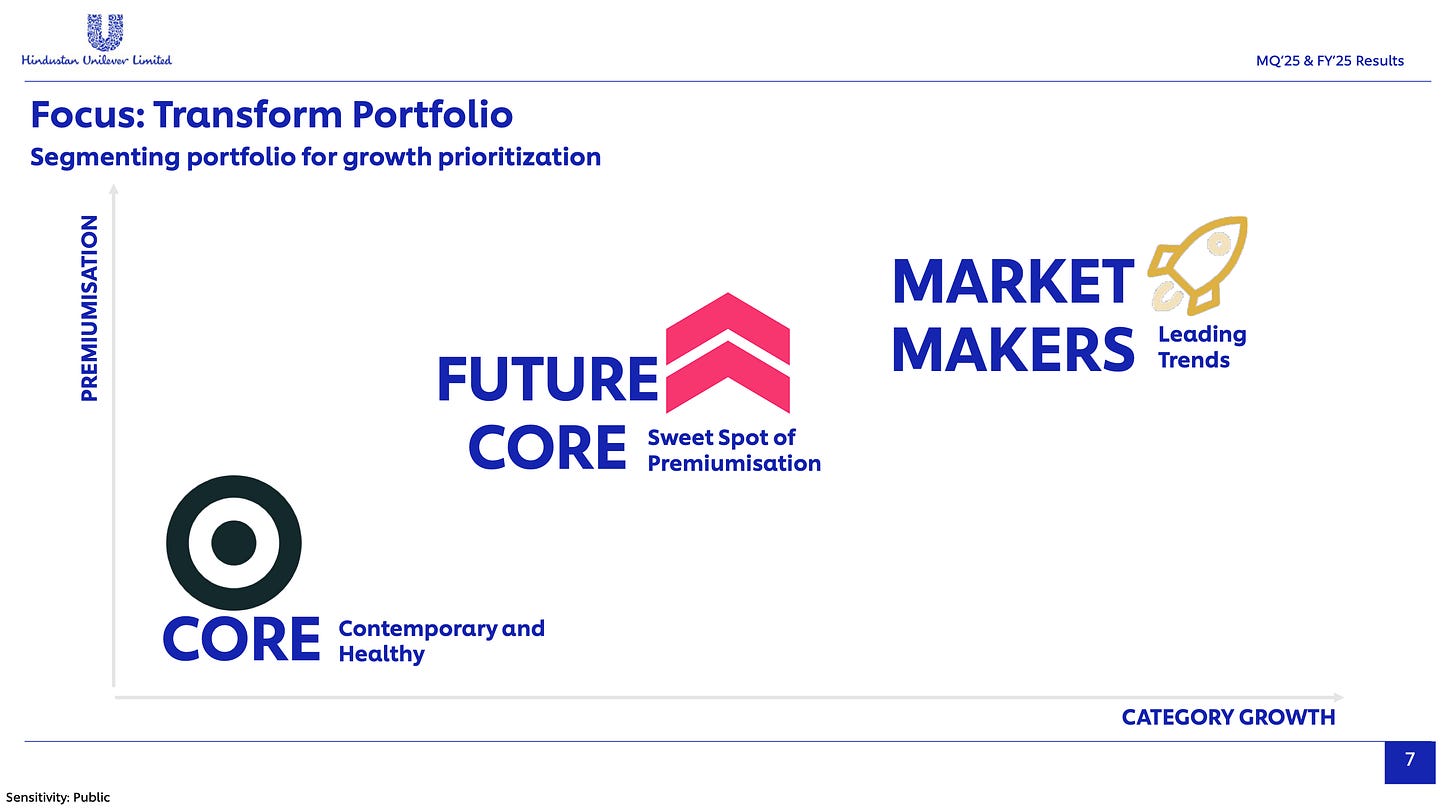
And they plan that >80% of their future growth will come from Future Core and Market Makers.
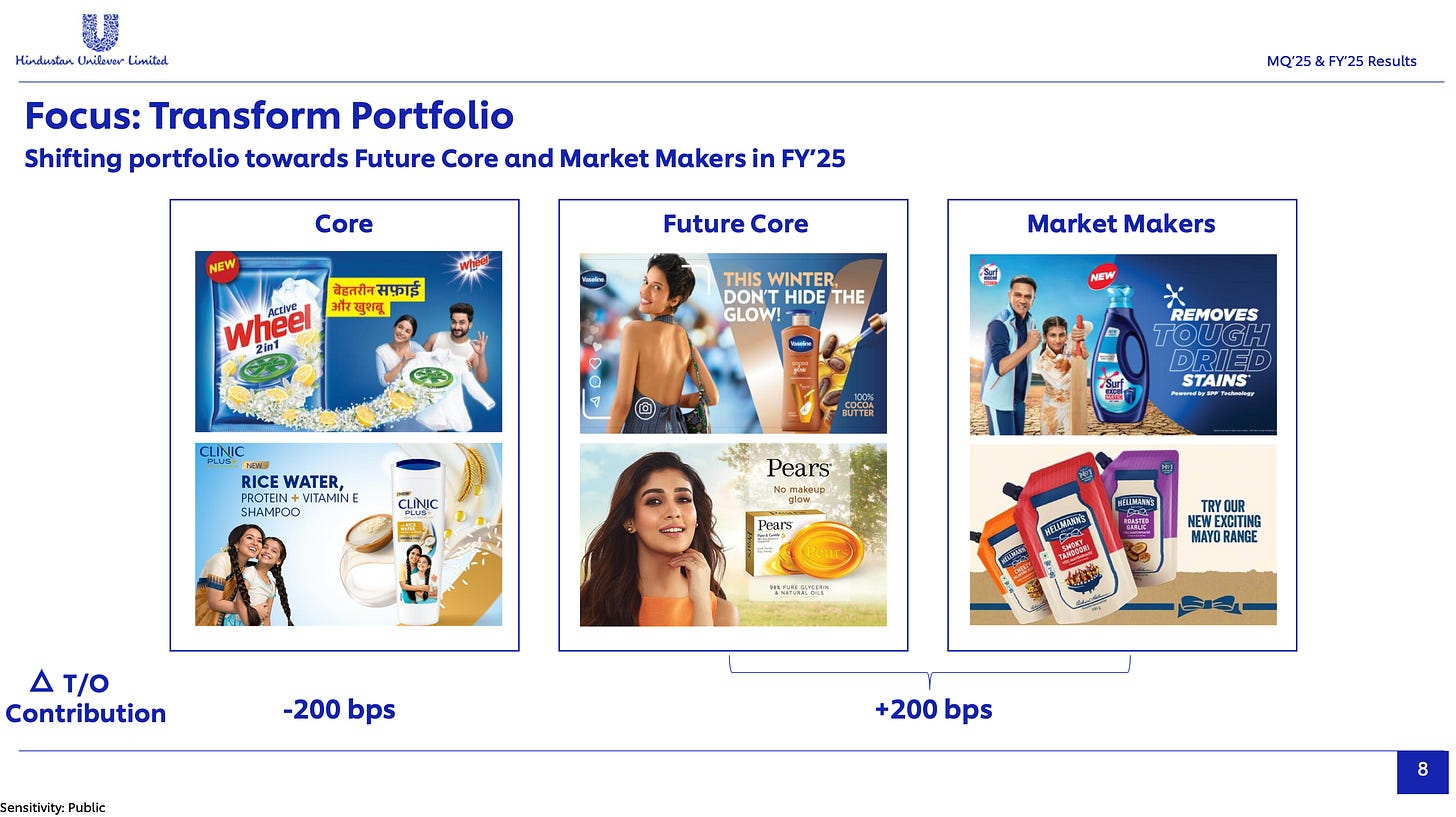
Brands consumers desire less (Wheel, Clinic Plus, Axe, Sunsilk) might disappear over time.
Brands consumers are searching for more (Rexona, Pears, Vaseline, Surf, Hellmann’s) are being fed.
This is what de-averaged brand growth strategy in a complex stratified market like India looks like -a tightrope of feeding the fading brands slightly less and feeding future brands more.
The open question is whether the hardware — the packaging moulds, the sales beat plans, the recipe mixing container sizes, the distributor incentives — will let the software of ‘Future Core’ brands keep their spike as they scale. Or whether the same gravitational pull that flattened the ‘Core’ will eventually flatten them too.
Back to the cow
A family’s desire for a larger plot of land was bigger than the cost and complexity of getting a second cow.
Make the desire bigger than the cost – HUL knows this fundamental rule of marketing well.
All it needs, is to do it again for a whole new generation of consumers who refuse to be averaged into moulds of the last decade.
1 When I say brand propositions, I mean product + brand. Great brands cannot sell shitty products into infinity
Two ways to stay in touch
- Strategy Activator Workshops — done with you.
We have a proven approach that we tailor to your context.
At the end of the process, you will have a strategy blueprint that answers the five questions above. The approach has received great feedback from Harpic, Tata Salt and Tata Sampann. Click here to share your interest and I will get back to you.
- DIY Strategy Products
I am building self-serve products you can use to develop your growth strategy. Join the early list for first access.