Unilever recently announced that it will spend 50% of its advertising budget on influencer marketing and immediately, my Linkedin feed was colored in 50 shades of hot takes from “Unilever just killed influencer marketing!” To “TV is dead!”
This post is a request to everyone to unclutch their collective pearls.
This is one part of Unilever’s response to structural shifts inside the world’s most stratified consumer market.
To keep winning here, Unilever must run two parallel business models, and their shift from TV to influencer marketing is just the right move for the business model that’s bespoke for India 1.
Universal structural shifts become more complex in India’s stratified market
Structural shifts (Co-packers, VC funded D2C, E-Commerce, Digital media) have democratised the supply-side (Many D2C Brands) and made demand-side frictionless(Discovery, Choice and Access).
But inside the world’s most stratified consumer market, access, ability, and willingness to buy change depending on which India you market to.
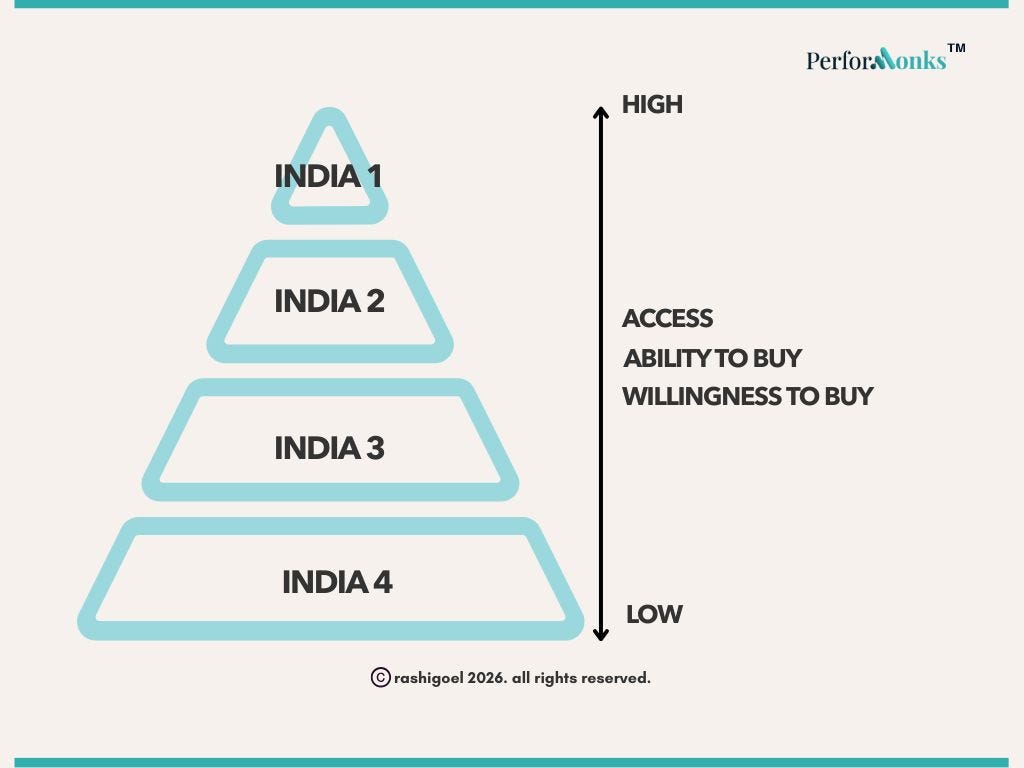
- India 1 has the access, ability, and willingness to try all kind of new products, from Strawberry Matcha to Oolong Boba tea.
- India 4 lacks access and ability to pay. She adds water to the milk she is lucky to get that day, so she can ration it out.
- India 2-3 straddle qualities of India 1 and India 4 at the top and bottom. In general, even those with access and ability to buy may not be as willing to try new products yet; most of them are just starting to break barriers and try Re.1 Nescafe at home.
The need for two parallel business models
Which is why, today more than ever, Unilever must deploy two parallel business models to continue to win in India.
- The age-old model of TV + Offline Distribution + Affordable Prices in Multiple SKUsfor India 2-3-4, which continues to watch TV and shop offline. Here, trust is earned goodwill from the past.
- The new one, Digital First + Premium + More Differentiated Products for India 1. Here, trust must be earned again.
HUL’s influencer move fills the awareness-building gap that people in India 11 left behind when they moved out (reduced time spent) from TV to digital.
The Science: how influencer marketing rebuilds reach and frequency for India 1
Media buying at scale has built brands for HUL (and The Great Indian FMCG Industry). Any media strategy has three moving parts.
- The science.
- Reach: how many people our ad reaches. Wider is better.
- Frequency: how many times people see our ad. More is better.
- The art.
- Quality of content: do people like, understand, remember, resonate with our ad?
Marketers generally get the first 2 right. (More on that in another post.)
Media planing and buying has been measured, optimised, and standardised into a mechanised beast – even more so for India’s biggest FMCG company, with a media budget (Rs.4,000 crore), that’s bigger than the turnover of decent sized companies.
Even with a sub optimal ad, the relentless machination of ReachXFrequency gets the brand in front of the consumer. Over years, this compounds into brand awareness. In a pre-internet, pre-co-packer, pre-D2C market, this was enough for substantial market share.
Cut to today. India 1 and parts of India 2 have taken their reach and frequency with them as they pulled away from TV.
When many influencers talk about brands at scale, they rebuild that mass awareness on digital.
The high reach / low engagement part of the quadrant (top left and top right).
I wrote about this 3 years ago, in A simple influencer framework.

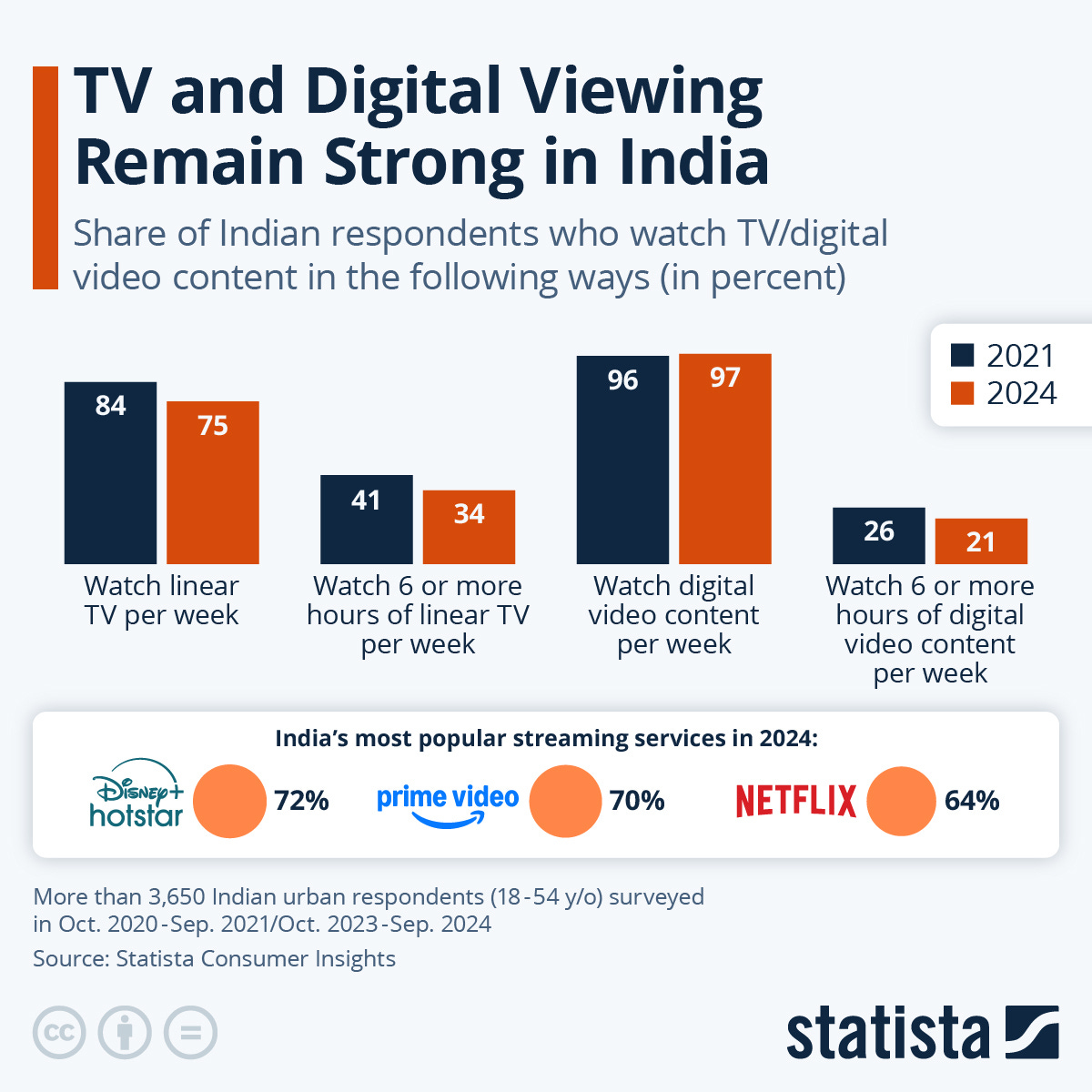
If you need data to be convinced, here are some charts I found on Google. This survey zooms into urban India ( a rough proxy for India 1 and 2), and shows that TV viewing is declining…
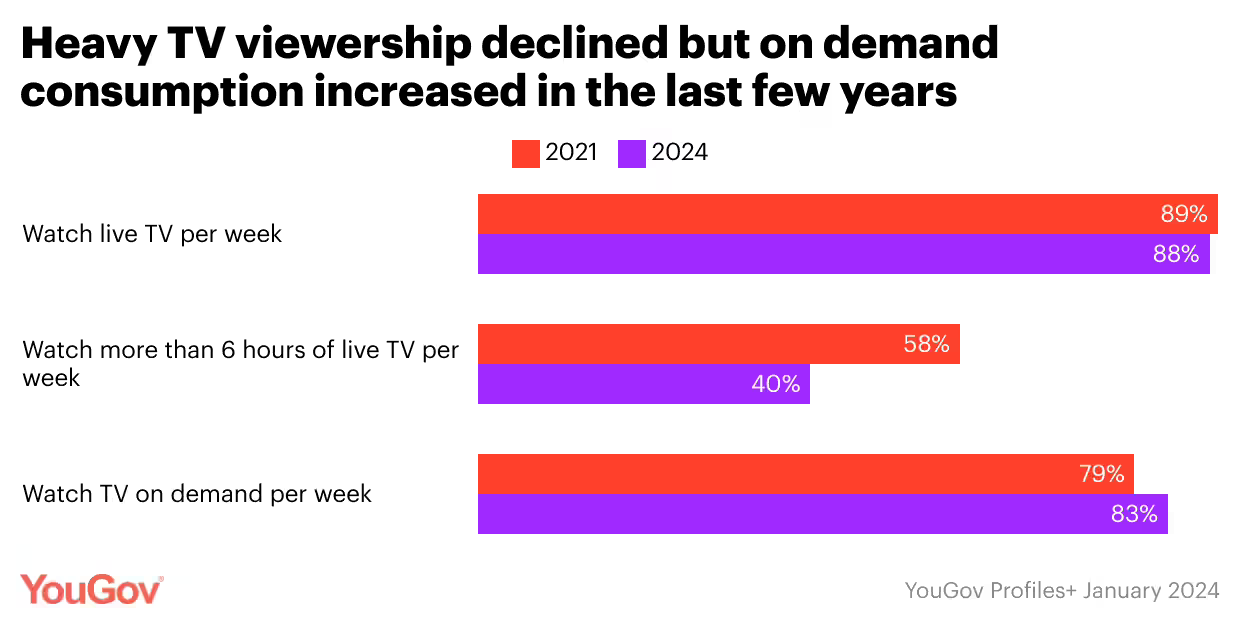
.. and is getting fragmented across a multitude of digital platforms.
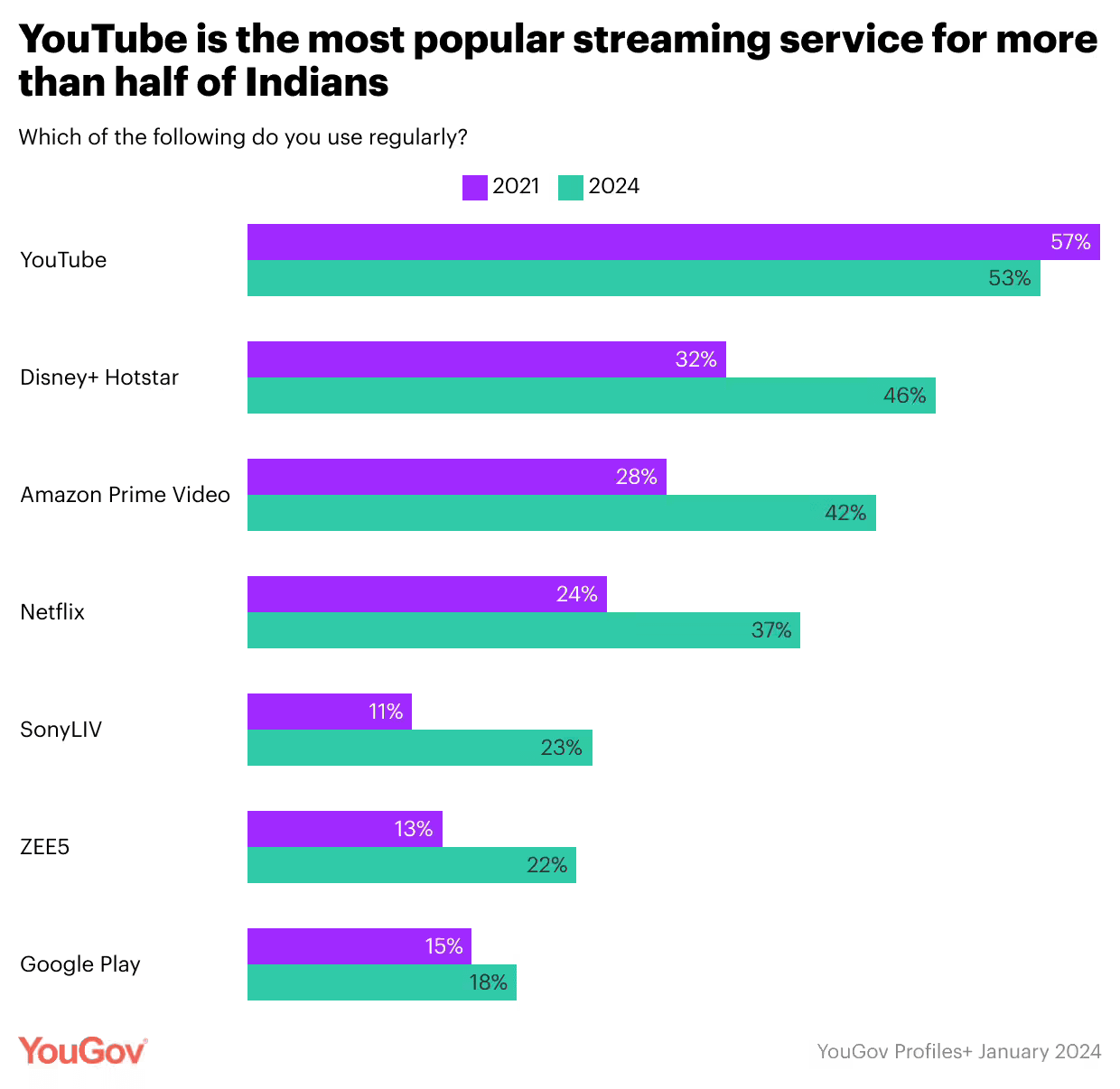
At an aggregate level, India remains an ‘and’ market. That’s why the dual business models – influencer marketing is in addition to the existing media mix of TV and digital video. HUL is not throwing the baby out with the bath water!
Now, the art
This audience is mature, discerning and cynical, with everyone trying to sell them stuff 24/7.
They know that the same big celebrities get paid big bucks to talk up brands from Gutka to Air fryers.
For this consumer, how is an influencer talking about Dove and Rin but in a meaningful, insightful way, maybe even through a funny skit, worse than a 20-second TV ad talking at them?
I suspect they will take the funny skit any time of day.
This is why artful execution will make or break this strategy.
If the good folks at HUL don’t plan, strategise and think brand backwards about-
- which influencer speaks for which brand,
- how they say what they say and,
- whether what they say is meaningful to the audience and smells of trust,
Then this strategy will only accomplish two out of three roles of media. HUL will buy eyeballs, but not end up earning trust in an increasingly trigger happy audience that’s racing ahead.
Thanks for reading and next week, HUL’s second move- distribution to reach consumers and to claw back margins.
1 and the creamy layer of India 2
More ways to connect
- Strategy Activator Workshops — done with you.
We have a proven approach that we tailor to your context.
At the end of the process, you will have a strategy blueprint for growth. The approach has received great feedback from Harpic, Tata Salt and Tata Sampann. Click here to share your interest and I will get back to you.
- DIY Strategy Products
I am building self-serve products you can use to develop your growth strategy. Join the early list for first access.